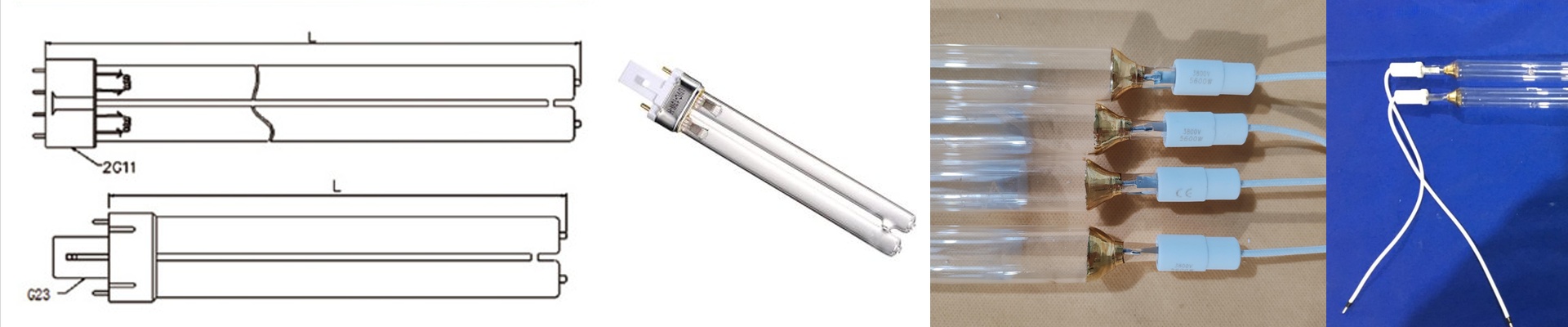
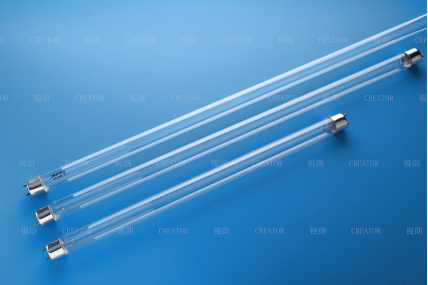
Getting the Science Right: Why 253.7nm Actually Matters
A lot of bulbs out there claim to be “germicidal.” But here’s the thing: not all UV is created equal. We obsess over a very specific window—253.7nm. Why? Because that’s the sweet spot. It’s exactly where DNA and RNA absorb the most energy, which basically breaks the molecular bonds of microorganisms so they can’t replicate. If that wavelength drifts even a tiny bit, your sterilization rate tanks. It just doesn’t work as well.
Keeping the Light Pure
You can’t just use any glass for this. Standard glass blocks UVC entirely. We use high-purity synthetic quartz for our envelopes. We’re very picky about the specs because we want as much of that 254nm light as possible to get through. Plus, it stops “solarization.” That’s the annoying process where quartz turns brown over time and chokes off the UV output. By cleaning up the impurities in the glass melt, we make sure the lamp stays strong for its entire lifespan.
The Balancing Act
Getting these specs right across thousands of bulbs is a bit of a tightrope walk. It all comes down to the mercury vapor pressure inside the tube. If there’s too much pressure, the lamp starts absorbing its own photons. If there’s too little, you lose your punch. We spend a lot of time balancing the fill gas and the electrode materials to keep the arc stable. It means when you wire these up to your industrial ballasts, they don’t just burn out prematurely.
A Quick Heads-Up on Heat
High-output UVC lamps get hot. That’s just physics. While the lamps are built for the job, the heat at the ends can wear down the filaments if the air isn’t moving. If your fixtures are tucked away in a stagnant corner, the electrodes will degrade faster. Just make sure you’ve got some decent ventilation going. Your bulbs will thank you. And since we handle everything in bulk, we can keep the batches consistent. We test every single lot for spectral drift. So, when you get a shipment, every single tube hits the same microwatts per square centimeter. You just pop them in and they work.